

September 20, 2026
What Is Optical Compression? How Opto Compressors Work

An optical compressor turns signal level into light, then uses a light-sensitive element to control gain. That interaction can make the response depend on both level and duration, so an opto may follow a vocal phrase or bass line differently from a compressor with a fixed electronic timing curve. Optical does not mean one speed, one sound, or one best use.
What is optical compression?
Optical compression, often shortened to opto compression, uses a light-producing element and a light-sensitive ement in the gain-control system. As the control signal changes the light level, the photosensitive element changes attenuation in the audio path.
The optical pair is only part of the compressor. Detector design, control circuitry, attack and release options, operating level, tubes or transformers where present, and the rest of the signal path determine how a particular opto compressor behaves.
How does an optical compressor work?
The detector follows the chosen control signal and produces a changing control voltage. That signal drives a lamp, LED, electroluminescent panel, or another light-producing device. A photoresistor or other light-sensitive component responds to the illumination and changes the amount of attenuation applied to the audio.
This conversion from electrical level to light and back to electrical control introduces behavior that can differ from a simple fixed attack-and-release model. The light source does not necessarily brighten and darken at the same rate, and the photosensitive element may not react or recover identically after a short peak and a long sustained note.
The light-producing element
Different light sources can have different output ranges and time behavior. The amount of light produced also depends on how the control circuit drives the source. Calling a compressor optical does not identify a universal lamp, voltage, or timing curve.
The light-sensitive element
The light-sensitive element changes its electrical behavior as illumination changes. Its response may depend on the recent light history as well as the instantaneous level. The surrounding circuit determines how that change becomes attenuation in the audio path.
The detector and control circuit
The detector still decides what makes the compressor react. A sidechain filter can reduce the influence of low frequencies. A peak-oriented detector and one that follows average energy more closely can drive the same kind of optical element differently. Some opto compressors add manual attack and release controls or selectable timing modes, while others rely more heavily on the optical cell's inherent response.
Why can optical compression be program-dependent?
Program-dependent means the response changes with the incoming material instead of following one identical envelope for every event. A short snare peak, a held bass note, and a vocal phrase can illuminate the optical element for different lengths of time. The recovery after each event may therefore differ even when the peak gain-reduction reading looks similar.
This is easiest to hear across a phrase. A brief peak may cause a small, quick movement, while a sustained note can keep the element illuminated and make the compressor recover differently afterward. The next word or note may arrive while some gain reduction remains engaged.
Program dependence is not unique to optical compression, and it does not guarantee a particular musical result. It describes a response that depends on the signal history. The exact behavior belongs to the individual optical element and circuit.
What does optical compression change in audio?
An optical compressor can change the relationship between peaks, sustained level, and the recovery between musical events. Depending on the design and settings, you may hear:
- a vocal phrase held more evenly without every consonant receiving the same amount of gain reduction;
- a bass note controlled across its sustain rather than only at the initial pluck;
- an acoustic instrument moving forward or backward as the compressor follows longer notes;
- a bus becoming steadier when the recovery spans multiple hits.
Those outcomes are not automatic. A fast manual attack can reduce the front of a note. A long or program-dependent recovery can hold down the next event. A tube or transformer stage can add tonal change that is separate from the optical gain-control action.
Optical compression vs FET and VCA compression
Gain control: A light source and light-sensitive element change attenuation.
Design consideration: Response can depend on illumination history, element choice, and the surrounding circuit.
Do not assume: Every opto is slow, smooth, or intended only for vocals.
Gain control: A field-effect transistor forms part of the gain-reduction stage.
Design consideration: The design can support fast control, but detector and timing choices set the usable response.
Do not assume: Every FET compressor uses its fastest possible timing.
Gain control: A voltage-controlled amplifier or equivalent gain cell changes level.
Design consideration: Detector, ratio and knee behavior, timing, and nonlinear stages can vary widely.
Do not assume: VCA automatically means clean or transparent.
The compressor type identifies the gain-control method. It does not rank the compressors or predict the complete sound.
When is optical compression useful?
Optical compression is useful when its response follows the musical envelope you need. Common starting points include vocals, bass, acoustic guitar, keyboards, strings, and buses, but none of those sources belongs exclusively to an opto.
On a vocal, listen to the full line. If loud vowels settle without every consonant being pulled backward, the response may fit. On bass, compare the initial pluck, the sustain, and the recovery before the next note. On a bus, watch whether a sustained section keeps the compressor engaged longer than isolated hits.
If the compressor reacts too late, stays down too long, or changes tone in the wrong direction, another opto design or another compressor type may be a better choice.
Try this optical-compressor listening test
Choose a vocal or bass passage with short peaks and held notes.
- Set enough gain reduction to make the movement easy to hear.
- Match the output level to bypass as closely as practical.
- Compare a short loud event with a sustained one that reaches similar peak reduction.
- Listen to how quickly gain reduction builds and how much remains when the next note arrives.
- If the compressor offers manual and fixed or program-dependent timing modes, compare them at similar maximum reduction.
- Return to a musically useful setting and judge the complete phrase in the mix.
The useful information is in the envelope around the meter's highest number, not only the number itself.
Common misconceptions
Misconception: Optical compressors are always slow.
Correction: Optical systems can exhibit program-dependent timing, but the available speed depends on the light source, photosensitive element, control circuit, and any manual timing controls.
Misconception: Optical compression is always smooth or transparent.
Correction: Those are subjective results, not definitions. The gain envelope and the rest of the signal path determine how obvious or colored the processing becomes.
Misconception: Opto compressors are only good for vocals.
Correction: Vocals are a common application, but optical compressors can be useful on bass, acoustic instruments, keys, stems, and buses when the response suits the material.
Misconception: All optical compressors react the same way.
Correction: Different optical elements, detectors, timing modes, and supporting circuits can produce substantially different behavior.
Frequently asked questions
What does opto mean on a compressor?
It means the gain-control system uses a light-producing element and a light-sensitive element. The rest of the compressor still determines the detector behavior, timing options, gain range, and coloration.
Are optical compressors always slow?
No. Some optical systems have slower or program-dependent recovery, but there is no universal optical timing curve. Individual designs can add manual timing controls or use different optical elements.
Why is optical compression program-dependent?
The optical element can respond differently according to how strongly and how long it has been illuminated. A short peak and a sustained note can therefore produce different attack or recovery behavior.
Is an optical compressor only for vocals?
No. Vocals are one common use, but the same response may suit bass, acoustic instruments, keyboards, strings, or buses. The correct choice depends on the phrase and the result you need.
Can an optical compressor have attack and release controls?
Yes. Some designs expose manual timing controls or selectable modes, while others rely more on the behavior of the optical element. Those controls belong to the individual implementation.
Related Kiive Learn guides
Explore Kiive Plugins
Want to apply what you learned in your own mixes? Every Kiive plugin includes a fully functional 14-day trial with no card required.
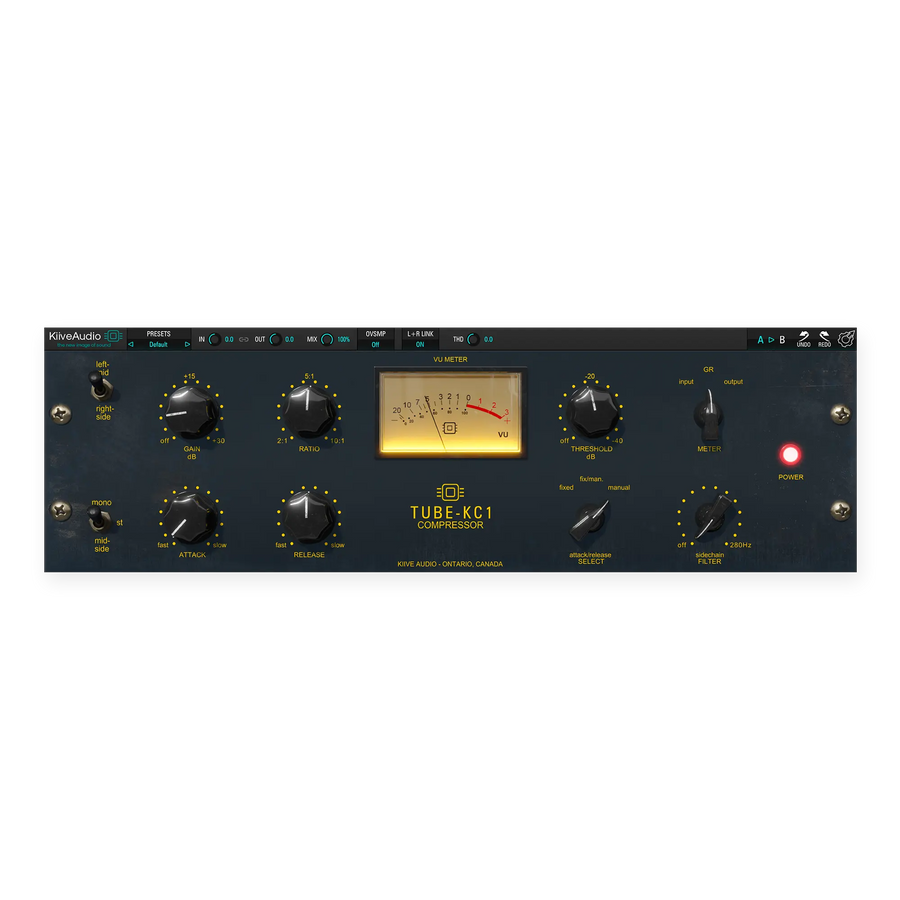
KC1 | Tube Compressor
Opto-style tube compression with manual and fixed timing modes plus a detector high-pass filter.