

September 15, 2026
Why 3 dB of Gain Reduction Doesn't Sound the Same on Every Compressor

Put two compressors on the same drum bus and match their output levels. Both meters dip to roughly 3 dB on the loudest snare hits, yet one leaves the transient and room decay mostly intact while the other softens the snare, holds the room down longer, or makes the whole kit feel noticeably more compressed.
The number on the gain-reduction meter can match while the compression does not. Three decibels tells you how much gain reduction is happening at a particular moment. It does not fully describe when the reduction began, how quickly it reached that point, how long it stayed there, how it recovered, what the detector reacted to, or whether the processor added its own tone.
That is why matching the maximum gain-reduction reading is a useful starting point for a comparison, but it is not the finish line. The audible result lives in the shape of the gain change over time.
3 dB only tells you part of the story
A gain-reduction meter is showing useful information. The mistake is asking one number to describe an entire moving envelope.
Imagine that two compressors each touch 3 dB of reduction on a snare. The first lets most of the initial crack pass before the gain reduction reaches its deepest point. The second begins turning the snare down while its attack is still developing. Their maximum readings can be nearly identical even though the transient arriving at the output has a different shape.
The same is true after the peak. One compressor may return close to unity before the room microphones bloom, while another stays pulled down through the decay. If you only watch the deepest meter reading, both examples look similar. If you listen to the snare, room, and next kick together, the difference is usually much easier to hear.
This is also why simply catching a peak and shaping the envelope are separate jobs. If a few isolated hits are the real problem, our guide to controlling peaks without overcompressing can help you decide whether to edit them, add a second stage, or change the main compressor.
Attack changes which part of the sound gets compressed
Attack controls how quickly gain reduction develops after the detector decides the signal needs to be turned down. On drums, that timing determines how much of the kick or snare transient reaches the output before heavier reduction takes over.
With a slower attack, more of the initial transient may pass before the compressor reaches the target reduction. The snare can keep more crack and the kick can keep more of its attack, while the body and sustain are still controlled. Shorten the attack and the compressor begins acting earlier, which can round the transient, pull the hit backward, or make a sharp drum feel denser.
Neither direction is automatically better. A slower attack can leave more peak level than you want, especially when the compressor is supposed to control sharp hits. A faster attack can be exactly right for a brittle snare, an uneven pick attack, or a vocal consonant that needs to sit closer to the body of the word. The useful question is not whether the attack is fast or slow. It is which part of the envelope you want the compressor to control.
Release changes what happens after the loudest moment
Release controls how the compressor recovers after the signal stops asking for the same amount of reduction. Two compressors can reach 3 dB on the same hit and then take very different routes back toward unity.
On a drum bus, a compressor that recovers before the next snare starts that hit from a different state than one that is still holding 1 or 2 dB of reduction. On bass, the release can change whether a long note settles naturally or seems to rise as the compressor lets go. Across a vocal phrase, it can decide whether the gain reduction follows each word or stays engaged across the whole line. On a mix bus, it can change how the kick, vocal, and ambience move together between strong beats.
A very quick release may create obvious level movement or distortion if the gain is changing too rapidly. A long release can keep the compressor working into the next event and make the result feel more consistently held down. Many compressors also use release behavior that changes with the incoming audio, so the same release control can recover differently after a short transient than after sustained gain reduction.
There is no perfect release position for every song. Listen for whether the compressor returns naturally between events, stays down for too long, or lets go so quickly that the room, cymbals, bass, or vocal tail seems to jump forward.
The detector changes what makes the compressor react
Listen to which parts of the signal make the compressor lean in. One detector may jump at the snare's attack, while another reacts more to the body of the kit or the energy that hangs around after the hit.
With both compressors peaking at 3 dB, the first can shave the snare attack while the second pulls down more of the sustain. The meter reaches the same number, but each compressor is following a different part of the hit.
On a stereo bus, listen for what makes the whole mix dip. Some compressors react to the loudest channel, some to a combined average, and some to a filtered sidechain or an external signal. If the kick consistently makes the meter move harder than the snare or vocal, the detector is probably following more of that low-frequency energy. The compression may be moving around the kick even when the maximum reading looks modest.
Low end can change the result
A kick or bass note can carry enough low-frequency energy to drive the detector harder than the rest of the mix suggests. The compressor then turns down the entire drum bus or mix bus in response, so cymbals, guitars, vocals, and ambience dip along with the low end.
Filtering the detector or sidechain can reduce how much that low-frequency energy triggers compression without removing the bass from the audible signal. This is one of the reasons small amounts of bus compression can sound more obvious than the meter suggests. For a broader look at the job and placement of bus compression, read How Bus Compression Works and Where to Use It.
Knee, ratio, and program-dependent behavior shape the envelope too
Once attack and release are close, listen to how the compressor eases into gain reduction. A softer knee can begin working before the loudest part fully crosses the threshold, so the movement feels gradual. A harder knee holds off longer, then becomes more obvious as the hit crosses the threshold. The meter can still land at 3 dB in both cases, but the lead-in to that point will feel different.
Ratio changes how strongly the compressor responds once the signal moves into gain reduction. You can adjust the threshold at two different ratio settings until both eventually reach 3 dB, but the level relationship leading into that point will not necessarily be the same. Once again, the identical meter reading only describes one moment in the compression curve.
Program-dependent behavior becomes easier to hear when the same setting meets different material. A short snare hit may let go quickly, while a sustained bass note keeps the gain reduction hanging on. Listen for whether the recovery changes with phrase length, note length, or how hard the compressor is driven. Automatic timing modes make this explicit, but some compressors also vary internally even when the controls appear fixed.
Compression can also bring its own coloration
Gain reduction and coloration are separate processes, even when they live inside the same compressor. Some processors are designed to stay very clean. Others include tubes, transformers, saturation stages, or intentionally colored algorithms that can add harmonics or change the tone as they’re driven.
That means two compressors can create a similar dynamic envelope and still sound different. If the apparent punch, brightness, density, or low-mid weight changes even when timing and output level are close, listen for coloration rather than assuming the gain-reduction meter is missing something.
Try this in your own session
- Choose a drum loop or drum bus with a clear kick and snare.
- Load two different compressors and bypass any automatic output gain if you can.
- Adjust the threshold and other controls so both compressors show a reasonably similar amount of reduction on the louder hits.
- Match their output levels as closely as practical. A louder result can sound more exciting even when the compression itself is not helping.
- Compare both compressors with the full mix playing.
- Listen to the snare attack, the kick transient, the drum-room decay, how long the bus stays compressed, and whether the meter returns before the next strong hit.
- Change the attack and release while keeping the overall amount of reduction reasonably close, then listen again.
Do not spend the test chasing exactly 3.00 dB. The point is to compare similar amounts of compression while paying attention to timing, recovery, detector response, and tone. Exaggerate one control if a difference is hard to hear, identify what changed, then return to a setting that works in the mix.
What to check when the meter is not telling the whole story
| If you hear | Pay attention to |
|---|---|
| The snare loses its attack | Attack behavior |
| The compressor stays pulled down between hits | Release and program-dependent recovery |
| The kick or bass makes the whole bus dip | Detector weighting and low-frequency sidechain response |
| Similar reduction, but one result feels more controlled | The timing and shape of the complete gain-reduction envelope |
| Similar dynamics, but a noticeably different tone | Coloration, saturation, and level through the processor |
Frequently asked questions
Why do compressors sound different at the same gain reduction?
The maximum amount of gain reduction is only one point in time. Attack, release, detector response, knee, ratio, program-dependent timing, and possible coloration all affect the envelope and tone around that number.
Does more gain reduction always mean more compression?
A larger reading means more level reduction at that moment, but it does not tell you how much of the transient was affected or how long the compressor stayed active. A brief 5 dB reduction on one transient can affect less of the performance than 2 dB of reduction that stays engaged across an entire phrase.
Can 1 to 3 dB of compression noticeably change drums or a mix?
Yes. A small reading can still alter a snare transient, keep gain reduction engaged between hits, or let the kick drive the detector. The audible change depends on when the reduction happens and how the compressor recovers.
Should I match gain reduction when comparing compressors?
Matching it approximately gives you a useful reference, but also match output level and compare in the full mix. Then listen to the transient, sustain, recovery, detector response, and tone instead of choosing the compressor whose meter looks tidier.
The meter helps you see how hard a compressor is working. Your decision still comes from hearing what it does to the instrument, bus, or full mix before, during, and after that deepest point of gain reduction.
Explore Kiive Plugins
Want to apply what you learned in your own mixes? Every Kiive plugin includes a fully functional 14-day trial with no card required.
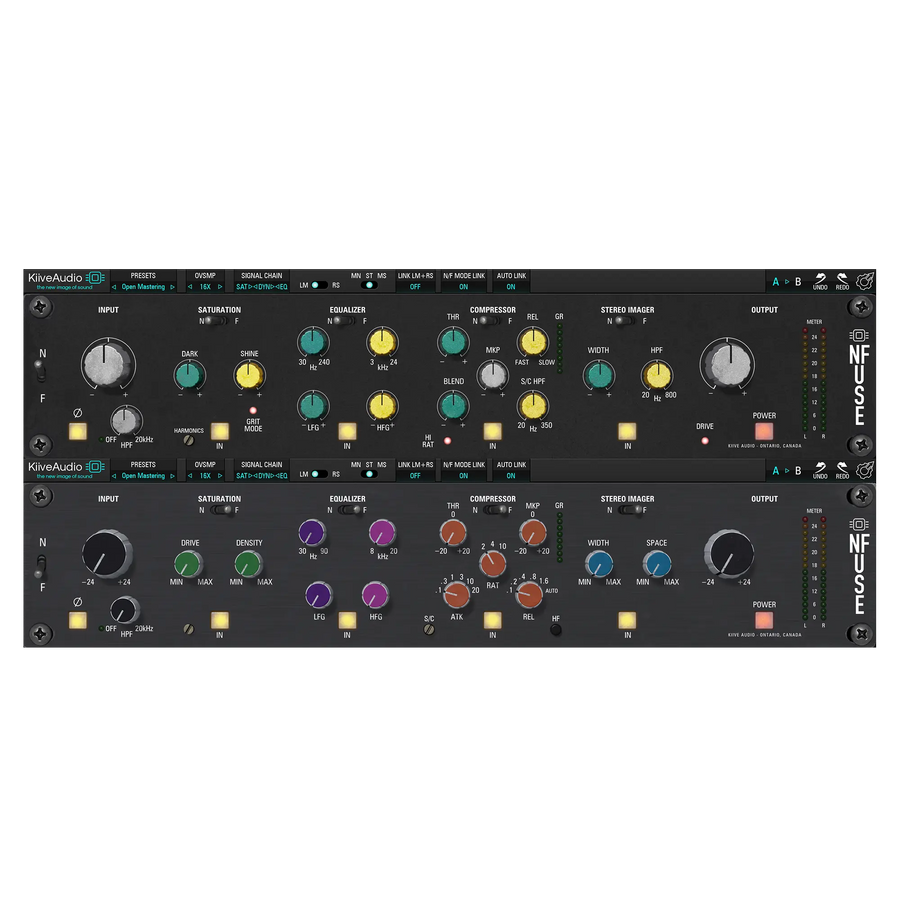
NFuse | Bus Processor
Compare two contrasting compression circuits inside the same bus-processing chain, then hear how each changes timing, transients, and tone.
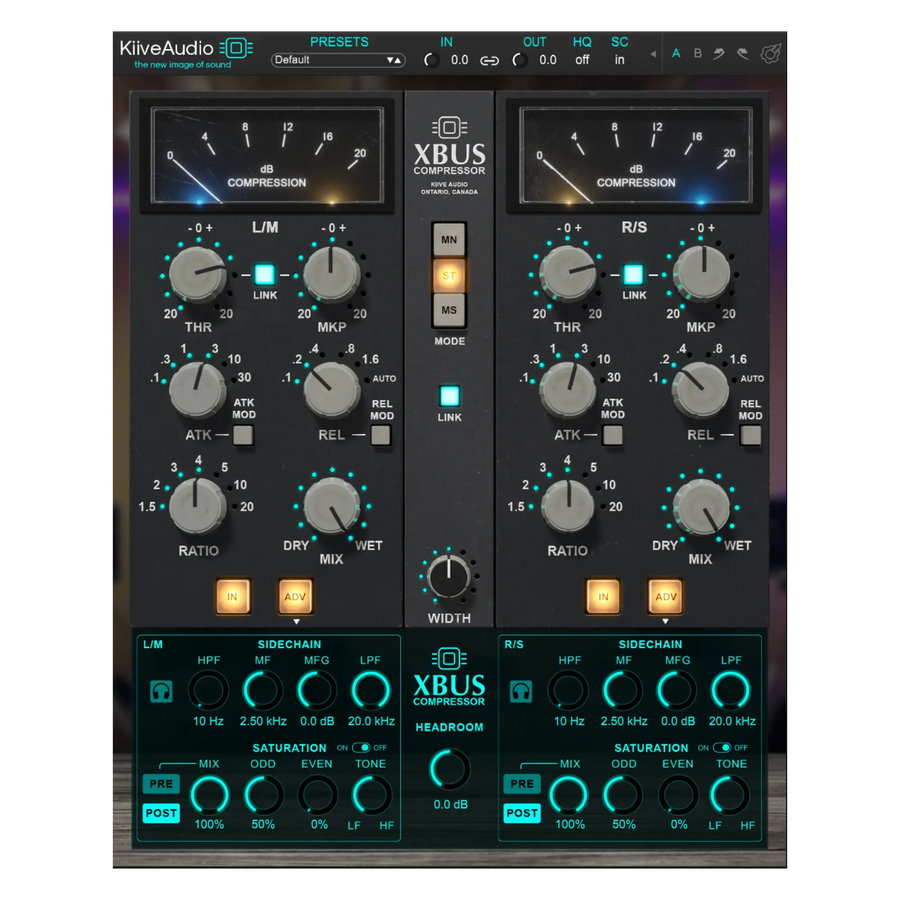
XBus
Use continuous attack and release controls plus sidechain filtering to shape bus movement without letting heavy low end dominate the detector.
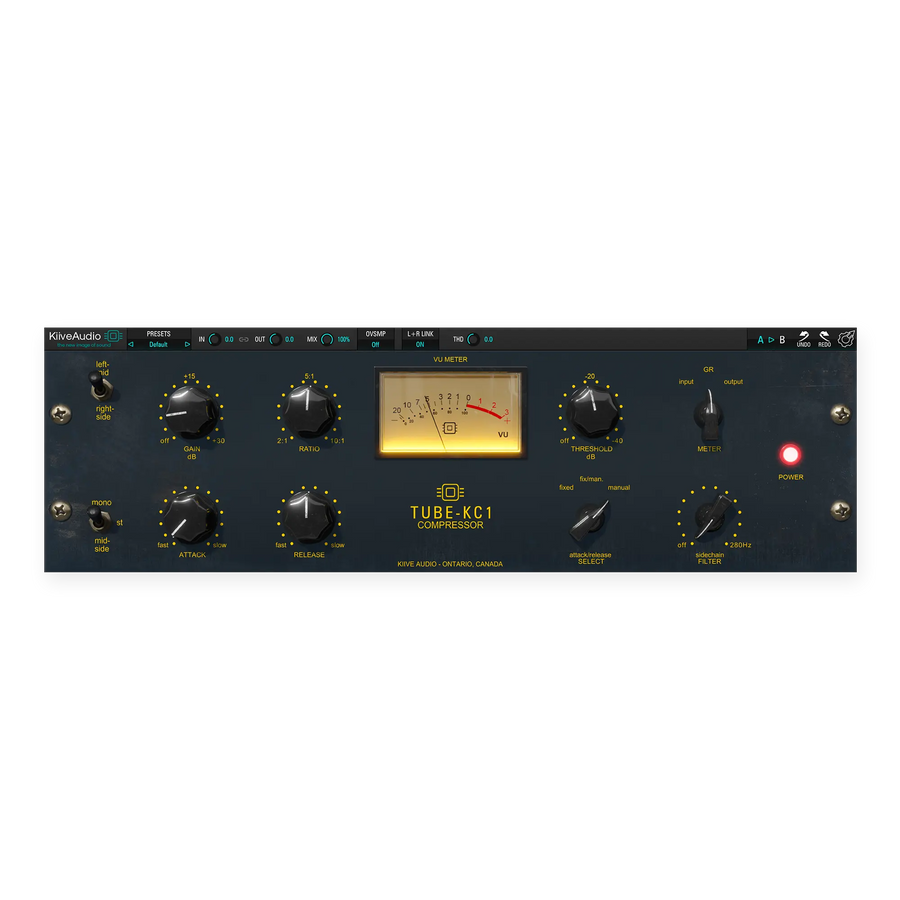
KC1 | Tube Compressor
Hear how opto-style gain reduction and manual timing can smooth a vocal or instrument with a different envelope than VCA-style bus compression.
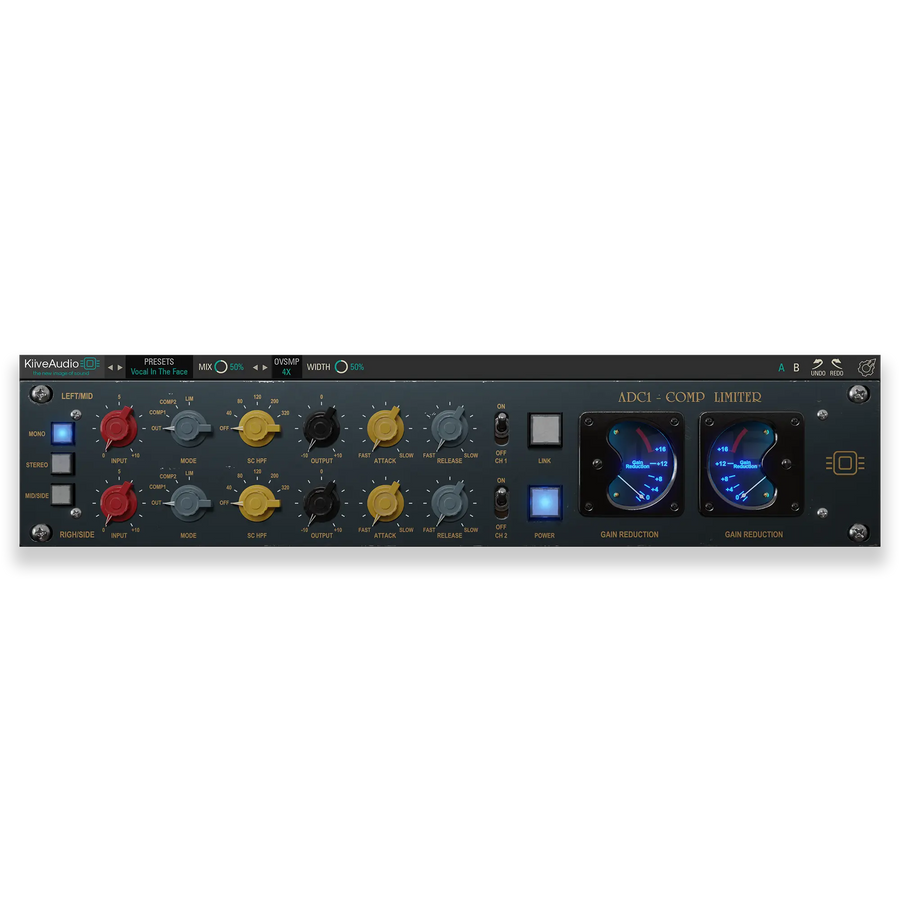
ADC1 Compressor / Limiter
Compare four diode-style compressor and limiter modes, then use width and parallel blend to hear how mode and signal path change the result.