

September 20, 2026
What Is VCA Compression? How It Works and Why It’s Used on Mix Buses

A VCA compressor uses a voltage-controlled amplifier, or an equivalent gain cell, to change level. That design can support precise control, flexible timing, stereo linking, and detailed sidechain behavior, which makes it a natural fit for drum buses, stems, and full mixes. VCA describes the gain-control method, not one fixed sound.
What is a VCA compressor?
VCA stands for voltage-controlled amplifier. In a compressor, the VCA is the stage that applies gain reduction according to a control signal created by the detector and timing circuit.
The VCA does not decide everything you hear. The detector decides what makes the compressor react. Threshold, ratio, and knee shape how strongly it reacts. Attack and release shape the movement over time. Input, output, saturation, and other nonlinear stages can add color around that gain change.
That is why two VCA compressors can behave differently even when they show the same amount of gain reduction.
How does VCA compression work?
Audio passes through the VCA gain stage on its way to the output. A detector follows the signal level and feeds a control circuit. Threshold, ratio, and knee determine the requested gain change, while attack and release determine how quickly that change builds and recovers. The resulting control signal tells the VCA how much to turn the audio down.
A VCA compressor may use peak or RMS detection, feed-forward or feedback control, different timing networks, stereo-linking methods, sidechain filters, and nonlinear stages before or after the gain cell.
Why did VCA compression become common on mix buses?
VCA gain control works well in designs that need repeatable settings, broad timing options, stereo linking, and predictable control over a summed signal. Those are useful qualities on a drum bus or mix bus, where the compressor must react to many instruments at once without letting one channel pull the stereo image around.
That does not mean every VCA compressor is a mix-bus compressor, or that VCA is the only design suitable for bus work. It means the gain-control method works well with the detector, timing, linking, and sidechain features engineers often want on a bus.
Stereo linking
On a stereo bus, linked detection helps both channels receive coordinated gain reduction. Without suitable linking, a loud event on one side can pull that side down harder and shift the image. Different compressors handle linking differently, so listen to centered drums, wide guitars, reverbs, and hard-panned percussion as well as the gain-reduction meter.
Flexible timing
VCA designs can offer broad attack and release ranges. A slower attack can let more of a kick or snare transient pass, while a faster attack can control that first hit more firmly. Release determines whether the compressor recovers between events, adds movement, or stays engaged across a phrase.
Those are possibilities, not fixed VCA traits. The available range and the shape between settings depend on the individual compressor.
Sidechain control
A mix bus contains low end, transients, sustained instruments, vocals, reverbs, and stereo information at the same time. A sidechain filter can reduce how much kick or bass energy drives the detector, allowing the compressor to respond more evenly to the rest of the mix without removing low end from the audible path.
Repeatable ratios and gain control
VCA designs can support well-defined ratios and a wide control range. That makes it easier to move from subtle bus control to heavier parallel compression inside one design. The result still depends on knee, timing, detector behavior, and input level, so the ratio value alone does not tell you how firm or audible the compression will feel.
Does VCA compression sound clean or transparent?
Not necessarily. VCA describes the gain-control stage, not the entire processor. A VCA compressor can include transformers, saturation, clipping, nonlinear amplifiers, or modeled color stages. It can also be designed to stay relatively restrained over part of its operating range.
Even without an obvious color stage, gain reduction changes the shape of the audio. A fast attack can reduce the first transient. A release that returns between drum hits can add movement. A detector that follows low frequencies heavily can pull down the entire bus when the kick lands. None of that is captured by the word transparent.
If a VCA compressor has optional saturation, compare the gain reduction with that stage bypassed first. Then re-enable it and listen for tonal change separately from envelope change.
What changes how a VCA compressor reacts?
Peak or RMS detection
A peak-oriented detector can react strongly to short transients. An RMS-oriented detector follows a broader window of signal energy. Either can be useful, and neither is automatically better. The practical question is whether the detector responds to the musical events you want to control.
Feed-forward or feedback design
In a feed-forward compressor, the detector reads the signal before gain reduction. In a feedback compressor, it reads the output. That changes the relationship between the incoming audio and the control signal. These are design choices, not simple modern-versus-vintage labels.
Knee and ratio behavior
Knee shapes the transition into compression, while ratio helps determine how strongly the level above threshold is reduced. Two compressors with the same printed ratio can still feel different because their knees, detectors, timing, and control ranges differ.
Saturation before or after compression
When saturation runs before the detector, it can change which peaks reach the compressor and how the compressor reacts. When saturation runs after compression, the gain-reduction envelope is set first and the color is added afterward. The order can change both tone and movement.
What should you listen for on a bus?
The first transient
Listen to how the first transient changes as you adjust attack and the amount of compression. If the snare loses too much attack, the compressor may be catching more of the initial hit than you want. If the transient feels too separate from the body of the kit, adjust the attack, threshold, or ratio and judge the relationship again in the full mix.
The space between hits
Release changes what happens after the loudest moment. If gain reduction returns before the next hit, the bus may breathe more. If it stays engaged, the mix may feel steadier but less open. Neither result is universally correct.
Low-end influence
Watch what happens when the kick and bass arrive together. If the rest of the mix dips or the image shifts, low-frequency energy may be dominating the detector. A sidechain high-pass filter can reduce that influence without EQing bass out of the mix.
Level-matched density
Compression can make a bus seem better simply because the output is louder. Match the processed and bypassed levels before deciding whether the compressor has improved punch, density, movement, or balance.
Where is VCA compression useful?
- Mix bus: Broad control, stereo linking, and sidechain shaping can help the compressor respond to the mix as a whole.
- Drum bus: Timing and ratio can shape the relationship between the hit, sustain, and room.
- Instrument stems: VCA compression can control guitars, keys, backing vocals, or percussion while preserving the internal balance of the group.
- Parallel compression: A broad control range and mix control can support heavier compression blended under the dry bus.
- Individual channels: VCA is not limited to buses. The same design can control vocals, bass, percussion, or other instruments when its response suits the material.
VCA vs FET vs optical compression
Gain-control method: Voltage-controlled amplifier or equivalent gain cell.
Useful starting point: Precise bus control, flexible timing, sidechain shaping, and stereo linking.
Important caveat: Does not automatically mean clean or transparent.
Gain-control method: Field-effect transistor in the gain-reduction stage.
Useful starting point: Fast transient control and audible movement on drums, vocals, or parallel buses.
Important caveat: Does not define one attack speed.
Gain-control method: Light source and light-sensitive element.
Useful starting point: Program-dependent leveling on vocals, bass, or acoustic instruments.
Important caveat: Does not automatically mean slow.
These descriptions are useful starting points. The individual compressor and settings decide the result.
Try VCA compression in your own session
Use a chorus or other dense section where kick, snare, bass, vocals, and sustained instruments play together.
- Start with optional saturation bypassed.
- Set a modest ratio and adjust threshold for a small amount of gain reduction.
- Level-match the processed and bypassed signals.
- Move attack from slower to faster and listen to the snare and kick rather than watching only the meter.
- Adjust release while listening to the space between hits and the way sustained instruments move.
- Engage the sidechain high-pass filter if available and notice whether low-end events stop pulling down the whole mix.
- Add parallel blend or saturation only after the basic envelope works.
The goal is to hear the detector, timing, and gain-control stage as one system rather than treating VCA as a preset sound.
Common misconceptions
Misconception: VCA compressors are transparent.
Correction: VCA identifies the gain-control stage. Timing, detector behavior, sidechain design, saturation, and supporting circuitry can all make the compression audible.
Misconception: VCA compression is only for mix buses.
Correction: VCA designs are common on buses, but they can also work on individual instruments and parallel paths.
Misconception: The same ratio means the same response.
Correction: Knee, timing, detector behavior, threshold, input level, and the individual design all affect how that ratio feels.
Frequently asked questions
What does VCA mean in a compressor?
It means the compressor uses a voltage-controlled amplifier, or equivalent gain cell, to apply the gain change requested by the detector and control circuit.
Is VCA compression always clean?
No. A VCA compressor can include intentional saturation, transformers, nonlinear amplifiers, clipping, or other color stages. The gain-control type does not define the full sound.
Why are VCA compressors used on mix buses?
The design can support precise gain control, flexible timing, stereo linking, sidechain filtering, and repeatable ratios, all of which are useful when controlling a summed mix.
Is VCA compression good for drums?
It can be. Attack and release can shape the relationship between the first hit, the body of the drums, and the room, while sidechain filtering can reduce excessive kick influence.
Does a sidechain filter remove bass from the mix?
Not when it is only in the detector path. It changes how strongly low frequencies trigger gain reduction without removing them from the audible bus.
Related Kiive Learn guides
Explore Kiive Plugins
Want to apply what you learned in your own mixes? Every Kiive plugin includes a fully functional 14-day trial with no card required.
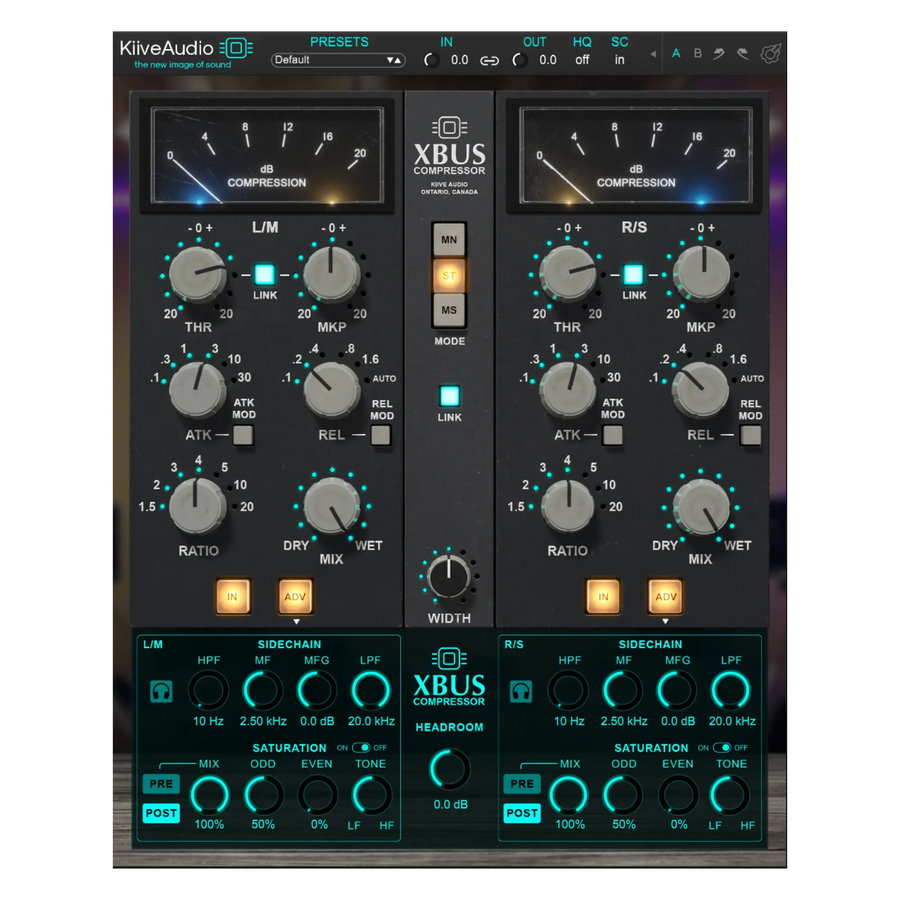
XBus
VCA bus compression with sidechain filtering, parallel blend, Headroom control, and saturation that can run before or after compression.