

September 20, 2026
Diode-Bridge Compression Explained: How It Works and Where to Use It

A diode-bridge compressor uses a bridge of diodes as the part that changes gain. That tells you how level is controlled, but it does not define one attack, release, amount of color, or style of movement. The detector, timing, bridge operating level, amplifiers, and transformers where present all shape how a particular diode-bridge compressor reacts.
What is diode-bridge compression?
Diode-bridge compression is a gain-control method in which a network of diodes changes attenuation according to a control signal. The audio passes through the gain-control stage, while a detector measures level and tells the control circuit how much gain reduction to apply.
The diode bridge is only one part of the compressor. Two diode-bridge designs can use different detectors, timing ranges, ratios, amplifiers, transformers, and operating levels, so they can behave very differently even though they share the same broad type.
How does a diode-bridge compressor work?
In a simplified signal path, audio passes through the diode-bridge gain stage on its way to the output. A separate detector follows the signal level. Threshold, ratio, knee, attack, and release turn that measurement into a control signal, and the control signal changes how much the diode bridge attenuates the audio.
Diode bridge compressor designs may read the signal before or after gain reduction, use different methods to drive the bridge, and place supporting amplifiers or transformers in different locations. Those choices are part of why the type cannot be reduced to one sound.
Why can diode-bridge compressors sound different?
The bridge changes gain, but the rest of the compressor determines what makes it react and how that reaction develops. Four areas are especially useful to separate when you listen.
Detector behavior
The detector decides which parts of the signal cause gain reduction. A detector that reacts strongly to peaks may pull down a snare hit differently from one that follows a wider window of energy. If the sidechain includes a high-pass filter, low frequencies can have less influence on the gain reduction without being removed from the audible signal.
On a drum bus, this can be the difference between the kick pulling the whole kit down and the compressor reacting more evenly to the snare, rooms, and cymbals. On a mix bus, it can decide whether one bass note moves the stereo image more than the rest of the song.
Attack and release
Attack shapes how quickly the gain reduction builds. Release shapes how the compressor returns after a loud event. Those controls influence whether the first edge of a drum hit passes, whether room decay moves forward, and whether the gain reduction recovers between notes or stays engaged across the phrase.
The word diode does not specify those timings. One diode-bridge compressor may offer several fixed positions, another may use continuously variable controls, and another may change recovery according to the incoming audio.
Bridge level and supporting amplifiers
The level at which the bridge operates and the way the signal is amplified before and after it can affect headroom, distortion, and how the compressor behaves when driven. Some designs remain relatively restrained at low gain reduction and become more audible as the input or amount of compression increases. Others are intentionally colored earlier.
That does not make one approach better. It means the amount of gain reduction is not the only variable worth matching when you compare two compressors. Input level and output level can change the result too.
Transformers and other nonlinear stages
Some diode-bridge compressors include transformers or other nonlinear stages. Those parts can add tonal change separately from the gain-reduction envelope. A thicker low midrange, a change in brightness, or extra density may come from those stages rather than from the bridge alone.
When the design allows it, bypass the compression stage while keeping the rest of the signal path active. That can help you separate color from the level movement created by gain reduction.
What does diode-bridge compression change in audio?
The audible result depends on the individual compressor and settings, but diode-bridge designs are often chosen when engineers want the gain reduction to contribute to the feel of a drum bus, stem, or mix.
Listen for three things:
- Transient shape: Does the first hit stay clear, become rounded, or get pulled backward?
- Movement after the hit: Does the room or sustain rise as the compressor releases, or does the whole phrase stay held down?
- Tone as the compressor is driven: Does the signal remain similar in tone, or does density and harmonic color become more obvious?
Those are listening questions, not guaranteed traits. The same diode-bridge compressor can react differently when the detector, timing, ratio, sidechain, and input level change.
Where is diode-bridge compression useful?
Drum buses and room microphones
Diode-bridge compression can work well when the goal is to shape both the hit and the movement that follows it. A slower attack may leave more of the first transient intact, while a faster setting can pull it down more aggressively. Release then decides whether the room opens between hits or remains compressed.
Mix buses and stems
On a mix bus or instrument stem, low amounts of gain reduction can provide broad control while leaving the internal balance mostly intact. Push the detector or shorten the timing and the compressor may become a more obvious part of the groove. Watch the low end closely, because kick and bass can dominate the detector if the design has no sidechain filtering or the filter is set too low.
Vocals and bass
A diode-bridge compressor is not limited to buses. It can control a vocal or bass line when its timing and ratio fit the phrase. The useful test is whether consonants, note attacks, and sustain remain in the right relationship after level matching.
Compression followed by limiting
Some diode-bridge processors pair a compressor with a separate limiter. When the limiter sits after the compressor, the compressor can shape the broader envelope while the limiter handles later peaks. The order is design-specific, so check the signal flow before assuming how the two stages interact.
Diode bridge vs VCA compression
Both types can be used on drums, stems, and mix buses. The difference is the gain-control method, not a fixed ranking or a promise about tone.
Gain-control method: A diode-bridge network changes attenuation.
What still varies: Detector, bridge drive, timing, amplifiers, transformers, ratio, and sidechain.
Useful starting question: Do I want this design's envelope and color on the bus or instrument?
Gain-control method: A voltage-controlled amplifier, or equivalent gain cell, changes level.
What still varies: Detector, feed-forward or feedback design, timing, ratio, sidechain, and nonlinear stages.
Useful starting question: Do I want this design's control range and detector behavior for the job?
Do not choose between them by assuming that VCA means clean and diode bridge means colored. Either type can be designed for restraint or for obvious character.
Compare a diode-bridge compressor in your own session
Use a drum bus or a mix section with clear low end, transients, and sustain.
- Start with optional color or saturation controls bypassed when possible.
- Set a modest ratio and adjust threshold for a small but visible amount of gain reduction.
- Level-match the processed and bypassed signals.
- Listen to the first transient, then the room or sustain behind it.
- Change only attack, then only release, so you can hear which part of the envelope each control is moving.
- Engage a sidechain high-pass filter if available and notice whether the kick or bass stops pulling down the rest of the bus.
- Push the input or gain reduction only after you understand the cleaner setting, then listen for tonal change separately from level movement.
The goal is not to prove that diode-bridge compression has one signature. It is to hear how that particular design uses the bridge, detector, timing, and supporting stages together.
Common misconceptions
Misconception: Every diode-bridge compressor has the same color.
Correction: The bridge is one part of the design. Amplifiers, transformers, timing, detector behavior, and operating level can all change the result.
Misconception: Diode-bridge compressors are only for mix buses.
Correction: They are often used on buses, but a suitable design can also work on vocals, bass, drums, room microphones, and other material.
Misconception: The limiter and compressor always share the same gain-control stage.
Correction: Some processors combine separate compression and limiting sections. Their order and interaction must be checked in the individual design.
Frequently asked questions
What is a diode-bridge compressor?
It is a compressor that uses a bridge of diodes as the gain-control element. A detector and control circuit determine how much attenuation the bridge applies.
Are diode-bridge compressors always colored?
No. Many designs include audible nonlinear behavior, but the amount and type of color depend on the bridge operating level, amplifiers, transformers, gain staging, and the rest of the design.
Is diode-bridge compression good for drums?
It can be. The useful result depends on how the attack, release, ratio, detector, and input level shape the drum transient and the room or sustain behind it.
What is the difference between a diode-bridge compressor and a limiter?
Diode bridge describes the gain-control method. Limiter describes a dynamics function with a steep compression characteristic and often fast timing. A processor can use diode-bridge compression and also include a separate limiter.
Does a sidechain high-pass filter remove bass?
Not when the filter exists only in the detector path. It reduces how much low-frequency energy triggers gain reduction while leaving the audible low end in the main signal path.
Related Kiive Learn guides
Explore Kiive Plugins
Want to apply what you learned in your own mixes? Every Kiive plugin includes a fully functional 14-day trial with no card required.
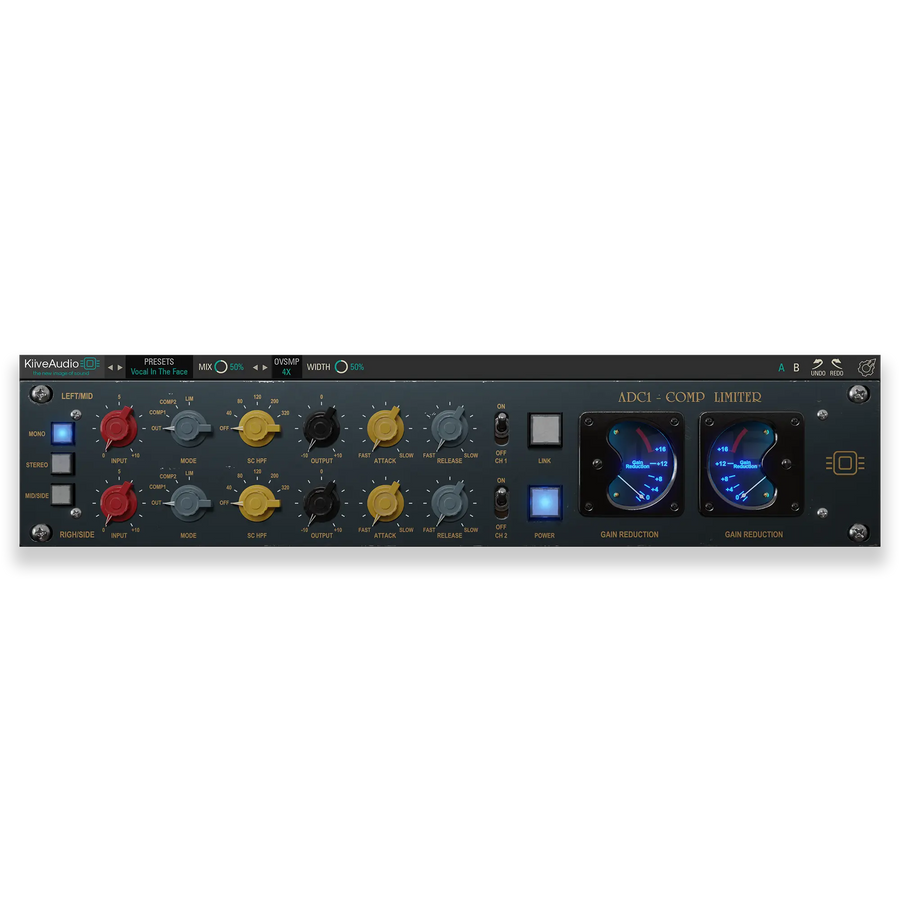
ADC1 Compressor / Limiter
Diode-style compression and limiting with multiple operating modes, sidechain filtering, parallel blend, and width control.
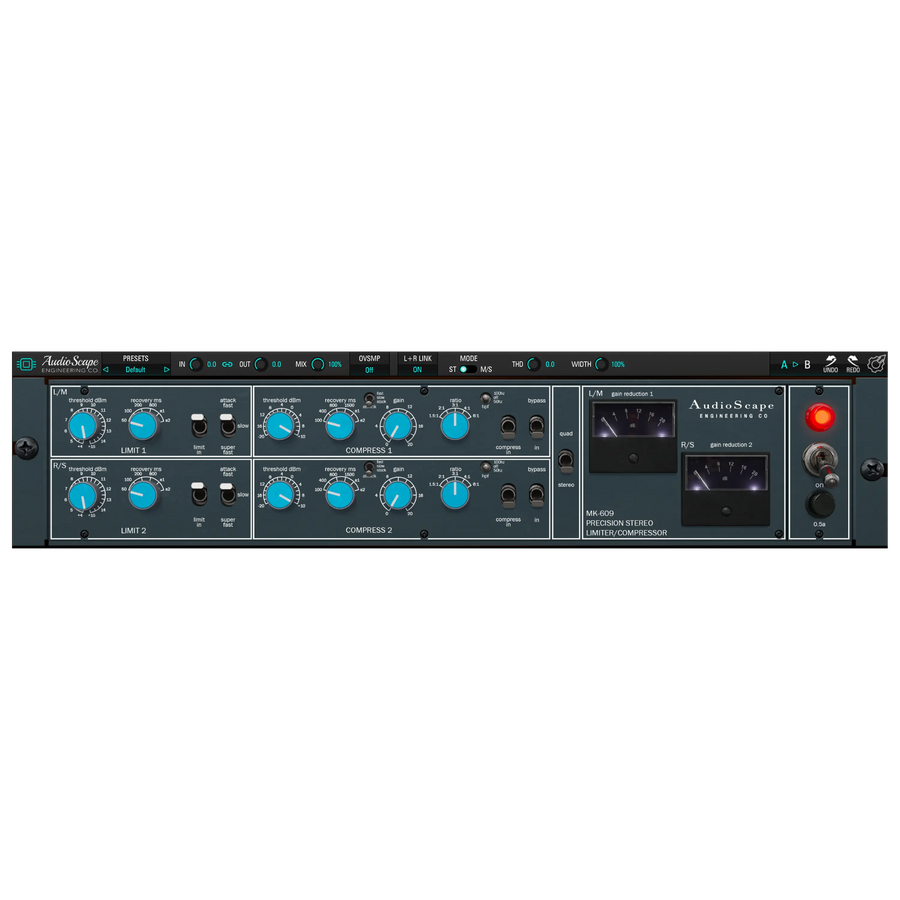
MK-609 | AudioScape
Diode-bridge compression and limiting with separate dynamics stages for shaping tracks, stems, and buses.