

September 20, 2026
Compressor vs Limiter: What's the Difference?

A compressor and limiter both reduce gain according to signal level, but they are usually designed for different control goals. Compression reshapes dynamic range across a phrase or performance. Limiting applies a much steeper transfer characteristic and often faster control to contain peaks or keep output below a target. The difference involves more than calling a limiter an infinite-ratio compressor.
What is the difference between a compressor and a limiter?
A compressor reduces the change in output level once the signal enters its compression range. A limiter is a form of dynamics processor designed to restrict peaks much more firmly, often with a steep ratio or ceiling-oriented control behavior.
The boundary is not universal. A compressor at a high ratio with fast timing can behave like a limiter. A limiter with a soft knee or program-dependent release may reduce level gradually before its strongest control. Detector design, timing, knee, lookahead, and the intended peak target all matter.
How do compressors and limiters control level?
Both processors use a detector and control path to decide when and how much to turn the signal down. The gain-control element or algorithm then applies that change to the audio.
Ratio and transfer curve
Ratio describes how much the output changes after the signal enters compression. A moderate ratio allows the output to keep rising, but more slowly than the input. A limiter uses a much steeper effective slope so additional input produces little output increase.
Real transfer curves can include a knee, level-dependent ratio, overshoot, or mode-dependent behavior. Infinite ratio is a useful idealized description, not a complete definition of every limiter.
Attack and release
Attack determines how the gain reduction builds around a rising signal. Release determines how it recovers. A compressor may intentionally let part of a transient pass to shape punch or preserve articulation. A peak limiter usually needs fast enough control to contain the target peaks, but its exact timing can still trade transient preservation against overshoot, distortion, and pumping.
Knee
Knee shapes the transition into gain reduction. A soft knee can begin compressing gradually around the threshold. A hard knee enters the steeper region more abruptly. Limiters can use either approach, so knee and ratio should not be treated as the same control.
Detector and measurement target
A detector may follow samples, peaks, true peaks, average energy, or another control signal depending on the design. A track compressor and a true-peak mastering limiter do not necessarily measure the same thing or solve the same problem.
Lookahead in digital limiters
A digital limiter can delay the audio briefly so its detector can examine an incoming transient before that transient reaches the gain stage. More lookahead gives the limiter additional time to reach the required reduction, while very short lookahead can preserve more transient shape at the cost of greater distortion or overshoot in some designs.
Lookahead introduces latency and is not required for every limiter. Analog limiters and zero-latency digital designs use other methods.
Compressor vs limiter comparison
Primary goal: Shape dynamic range and envelope.
Transfer behavior: Moderate to high ratio; output usually continues to rise.
Timing: Can preserve or reshape transients across a wide range.
Detector: Peak, average, RMS-like, or another control design.
Lookahead: Optional in digital designs.
Typical decision: How should the performance move?
Primary goal: Restrict peaks or hold output near a target ceiling.
Transfer behavior: Much steeper effective slope above the control region.
Timing: Often fast enough to control the intended peaks.
Detector: Peak, sample peak, true peak, or another implementation-specific design.
Lookahead: Common in digital peak limiters, but not universal.
Typical decision: Which peaks must be contained, and to what target?
This is a decision framework, not a strict product taxonomy. Some processors deliberately overlap both jobs.
What does a compressor change in audio?
A compressor can alter the relationship between a transient and its sustain, reduce differences between loud and quiet phrases, or make several sources move together on a bus. Attack and release are often chosen for the desired envelope, not simply for maximum peak containment.
On a vocal, a compressor may control words across a phrase while preserving consonants. On drums, it may let the initial hit through and bring room decay forward. On a mix bus, it may create shared movement across the arrangement.
What does a limiter change in audio?
A limiter focuses more strongly on the highest events. On a track or bus, it can catch occasional peaks that escape a slower compressor. At the end of a digital master, a suitable limiter can restrict sample or true peaks while input gain and output ceiling establish how much limiting occurs.
More limiting is not free. Heavy or poorly timed gain reduction can flatten transients, create distortion, pull down sustained material after peaks, or make the mix pump. The correct setting depends on whether the goal is occasional peak shaving, creative limiting, broadcast protection, or final-level control.
When should you use a compressor?
Use a compressor when the musical envelope is the problem:
- a vocal phrase moves too far forward and backward;
- bass notes need more consistent sustain;
- a drum bus needs a different balance between attack and room;
- a group or mix should move more cohesively;
- you want controlled dynamics without stopping every peak.
The compressor should be judged across the phrase, not only at its maximum gain-reduction reading.
When should you use a limiter?
Use a limiter when a small number of peaks are the main problem or when the output must stay below a defined target:
- occasional vocal or instrument peaks remain after the main compression sounds right;
- drum or percussion hits need peak shaving without changing the whole performance as much;
- a bus needs a separate final safety stage;
- a digital master needs sample-peak or true-peak control;
- aggressive limiting is being used deliberately as an audible effect.
If the limiter is working on every phrase, reconsider whether earlier level editing, compression, clipping, or arrangement balance should share the job.
Can you use a compressor and limiter together?
Yes. Dividing the work often preserves more of the desired envelope. A compressor can control the body of a vocal or bass line, then a limiter can catch the occasional peak that remains. On a bus, gentle compression can shape movement while a separate limiter handles short overshoots.
The order and settings matter. If the compressor removes too much transient before the limiter, the limiter may have little useful work left. If the limiter is first, it can change what the compressor's detector receives. Level-match and audition each stage separately.
A practical decision test
Use a passage where most of the performance sits correctly but a few moments jump out.
- Start with the compressor already producing the envelope you want.
- Lower its threshold or shorten its attack until the problem peaks are controlled.
- Listen for unwanted changes to the rest of the phrase.
- Return the compressor to the preferred envelope setting.
- Add a limiter after it and reduce only the remaining peaks.
- Match the output level and compare the two approaches in context.
If the limiter is reducing level almost continuously, the problem may be broader dynamic range rather than isolated peaks.
Common misconceptions
Misconception: A limiter is only a compressor with an infinite ratio.
Correction: A steep transfer curve is central, but timing, knee, detector type, lookahead, peak target, and release behavior also determine limiting.
Misconception: A limiter prevents every possible peak.
Correction: The result depends on the detector and target. Sample-peak limiting and true-peak limiting are not identical, and individual designs can allow different overshoot.
Misconception: Faster attack is always safer.
Correction: Faster control can catch peaks sooner, but it can also increase distortion or remove transient shape. Lookahead and release behavior change the tradeoff in digital designs.
Misconception: Limiting belongs only on the master.
Correction: Limiters can be useful on vocals, bass, drums, stems, and buses when the task is peak control or a deliberate effect.
Misconception: If a limiter is working hard, the mix is louder and better.
Correction: More gain reduction can reduce transient contrast and clarity. Judge loudness, peak control, distortion, and musical movement separately.
Frequently asked questions
Is a limiter just a high-ratio compressor?
That is a useful starting model, but it is incomplete. Limiters also differ in timing, knee, detector target, lookahead, release behavior, and how closely they control the output ceiling.
Should a limiter go before or after a compressor?
Often it goes after a compressor to catch remaining peaks, but the correct order depends on the job. A limiter before compression changes the transients entering the compressor.
Can I use a limiter on vocals or drums?
Yes. It can catch occasional vocal peaks, shave drum transients, or create a deliberate aggressive effect. Watch how the release affects the following audio.
What does lookahead do in a limiter?
It delays the audio so a digital limiter can anticipate an incoming peak and apply gain reduction before that peak reaches the output. More lookahead can improve containment but can soften transients and increase latency.
What is the difference between sample-peak and true-peak limiting?
Sample-peak limiting controls the discrete digital sample values. True-peak limiting estimates peaks that can occur between samples when the waveform is reconstructed, then controls against that target.
Related Kiive Learn guides
Explore Kiive Plugins
Want to apply what you learned in your own mixes? Every Kiive plugin includes a fully functional 14-day trial with no card required.
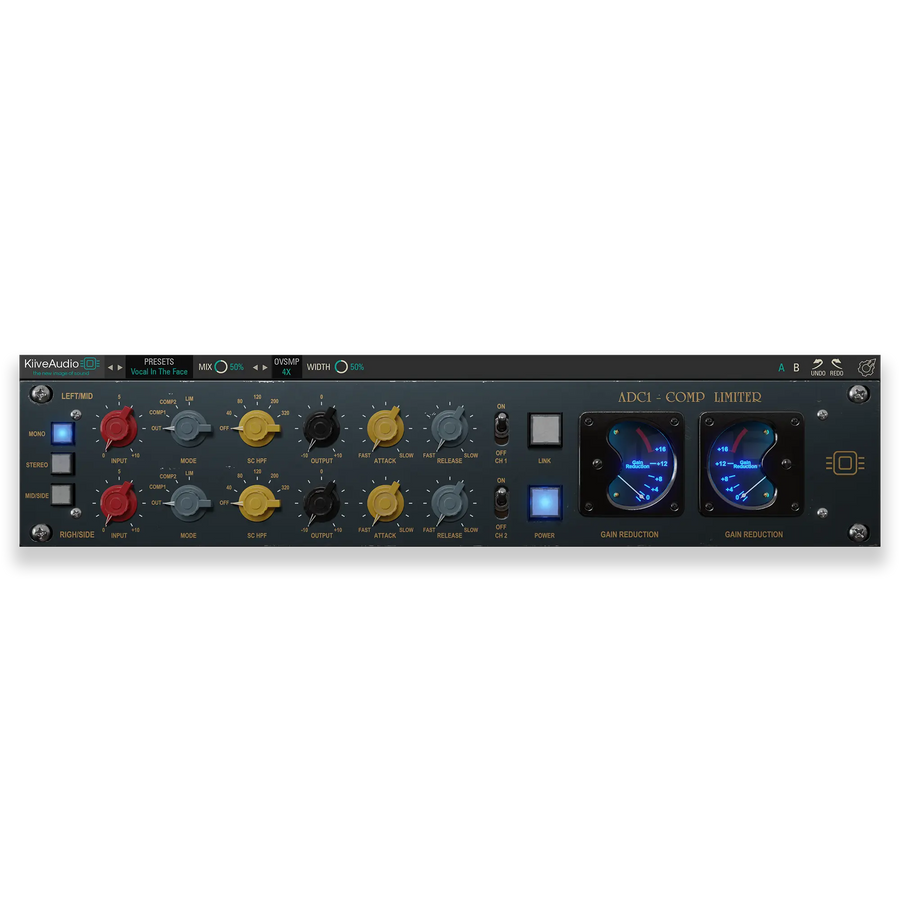
ADC1 Compressor / Limiter
Diode-style dynamics with dedicated compression and limit operating modes, selectable timing, and detector high-pass filtering.
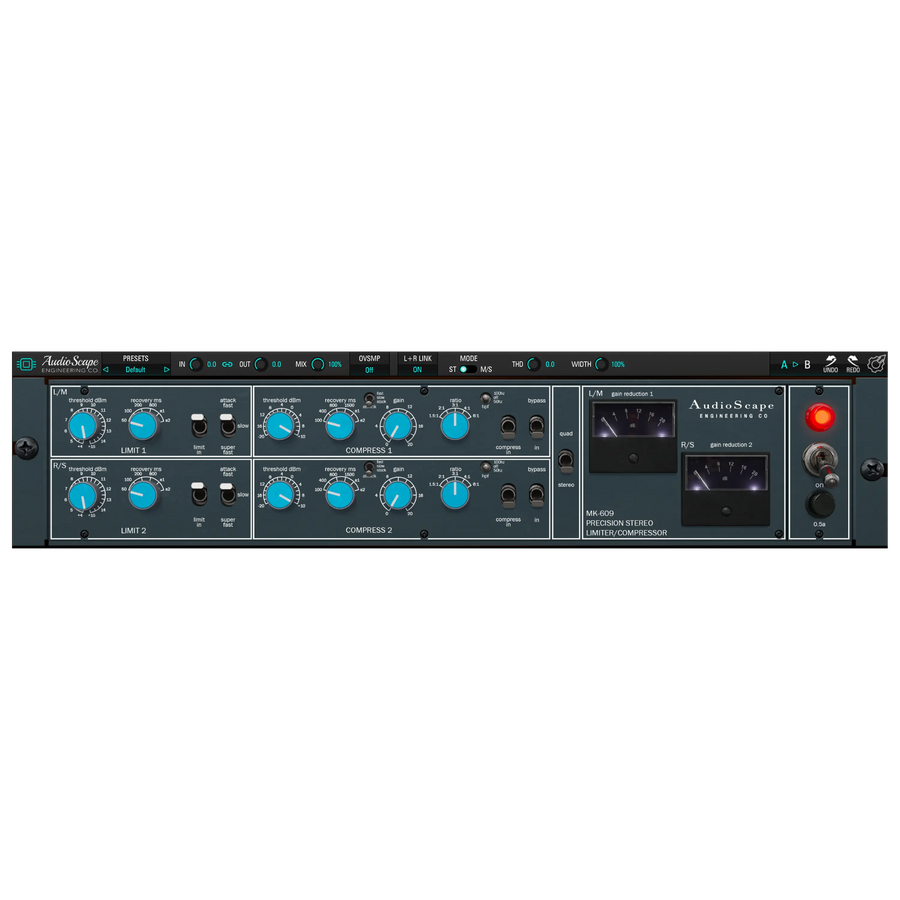
MK-609 | AudioScape
Diode-bridge compression and limiting with separately switchable compressor and limiter sections.
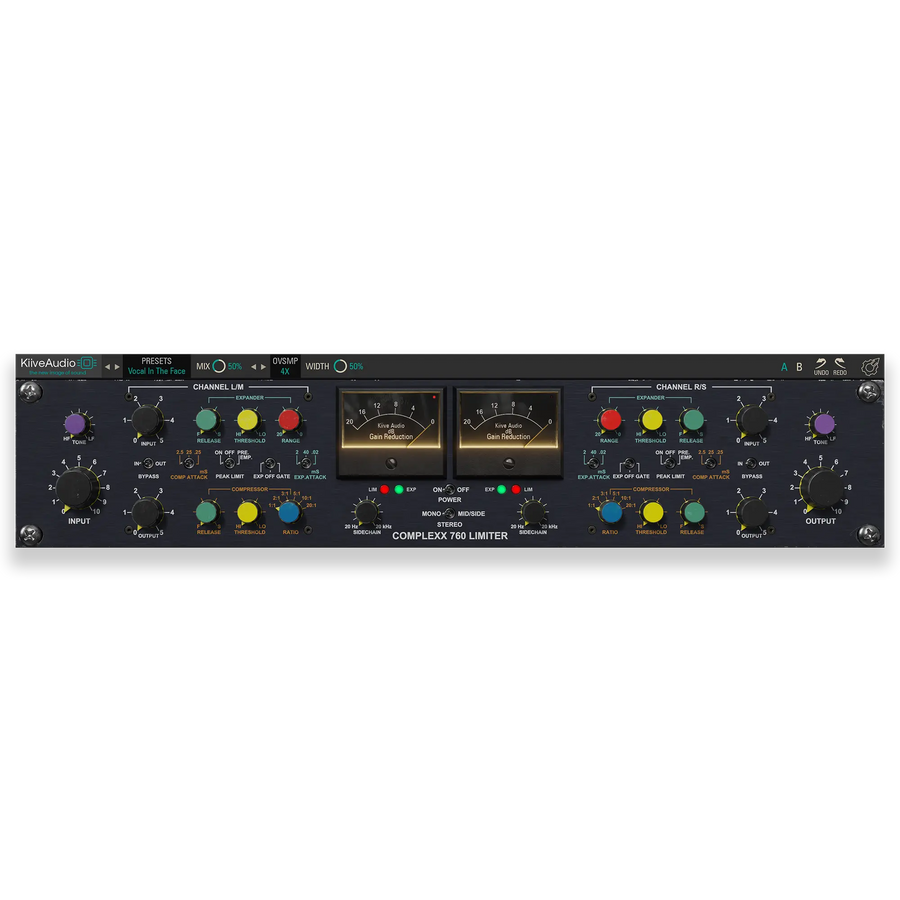
Complexx
FET dynamics processing with compression, expansion, and limiting in one processor.