

September 20, 2026
Audio Compressor Types Explained: VCA vs FET vs Opto vs Vari-Mu vs Diode Bridge

Two compressors can show the same gain reduction and still change a drum bus, vocal, bass, or full mix in very different ways. The compressor type tells you how the design changes gain, but it does not tell you the entire sound. This guide explains five common compressor types, what each name means, what else shapes the response, and what to listen for in your own sessions.
What are the main types of audio compressor?
Five of the most common compressor types are VCA, FET, optical, vari-mu, and diode bridge. Those names describe how the compressor controls gain, but they do not tell you everything about how it will sound or react.
The detector, attack and release behavior, knee, ratio, sidechain, operating level, and any nonlinear stages around the gain-control section can all change the result. Two compressors of the same type can therefore respond very differently.
VCA, FET, optical, vari-mu, and diode bridge compared
How it controls gain: A voltage-controlled amplifier, or equivalent gain cell, changes level according to a control signal.
What else shapes it: Peak or RMS detection, feed-forward or feedback design, timing, sidechain filtering, and any color stages.
Common uses: Bus compression, parallel compression, and precise level control.
Keep in mind: VCA does not automatically mean clean or transparent.
How it controls gain: A field-effect transistor forms part of the gain-reduction stage, often acting as a voltage-controlled resistive element.
What else shapes it: Detector design, feedback or feed-forward arrangement, ratio behavior, timing range, and how the FET is driven.
Common uses: Transient shaping, drum and vocal compression, and parallel compression with audible movement.
Keep in mind: FET does not define one attack speed.
How it controls gain: Signal level drives a light source, and a light-sensitive element changes attenuation.
What else shapes it: The light source, optical cell, surrounding circuit, and available timing modes.
Common uses: Leveling vocals, bass, and acoustic instruments.
Keep in mind: Optical does not automatically mean slow.
How it controls gain: A tube gain stage changes gain as the control signal changes its behavior.
What else shapes it: Tube circuit, transformers, time constants, operating level, knee, and ratio behavior.
Common uses: Vocals, bass, stems, and mix-bus leveling, plus color-only use in designs that allow it.
Keep in mind: Vari-mu does not automatically mean gentle or mastering-only.
How it controls gain: A diode-bridge network acts as the gain-control element.
What else shapes it: Detector design, bridge operating level, supporting amplifiers, timing, and transformer stages where present.
Common uses: Drums, stems, mix buses, and designs that combine compression with limiting.
Keep in mind: Diode bridge does not define one amount of color.
How does an audio compressor control gain?
A compressor has an audio path and a control path. Audio passes through a stage that turns the level down. The detector measures level, while the threshold, ratio, and knee determine the requested gain change. Attack and release shape how quickly that change develops and recovers.
The diagram is a simplified model, not a literal schematic for every compressor. Some detectors read the signal before gain reduction, while others read the output. Some react strongly to peaks, some follow average energy more closely, and some change their response with the program material. A filtered sidechain or external key can also change what makes the compressor react.
The detector measures level. The control circuit determines the gain change. The VCA, FET, optical element, tube stage, or diode bridge then applies that change to the audio.
What changes how a compressor sounds?
The gain-control method
VCA, FET, optical, vari-mu, and diode bridge describe the part of the compressor that changes level. That choice can affect the available timing, control range, program-dependent behavior, and nonlinear response, but it never works alone.
The detector and sidechain
The detector decides what makes the compressor react. A peak-oriented detector may respond strongly to a snare hit, while an RMS-oriented design can follow a broader window of energy. A sidechain high-pass filter can reduce how much kick or bass energy drives the detector without removing that low end from the audible signal.
Detector placement also changes the response. In a feed-forward compressor, the detector reads the signal before gain reduction. In a feedback compressor, it reads the output. These are different ways of controlling compression, not simple vintage-versus-modern labels.
Attack, release, knee, and ratio
Attack shapes how the gain reduction builds after the compressor reacts. Release shapes how it returns. Knee changes the transition into compression, while ratio helps determine how strongly level above the threshold is reduced.
The labels do not guarantee the same behavior from one compressor to another. A fixed attack position can represent different time values in different designs, and one compressor may change its recovery according to the incoming audio. Even when two meters show the same maximum reduction, the envelope around that number can differ.
Color from the rest of the design
Input and output amplifiers, tubes, transformers, saturation stages, clipping stages, and modeled nonlinearities can change tone separately from gain reduction. Some compressors let you bypass gain reduction while keeping those stages active. Others place saturation before or after compression, which changes whether the added harmonics affect the detector or only the compressed signal.
If two compressors create a similar gain envelope but one changes density, brightness, or low-mid weight, that difference may come from the rest of the design rather than the compressor type itself.
How does VCA compression work?
A VCA compressor uses a voltage-controlled amplifier, or an equivalent gain cell, to change signal level. The detector and control circuit generate a control signal, and the VCA applies the requested gain change.
VCA designs can support precise ratios, broad timing ranges, sidechain filtering, stereo linking, parallel blend, and either feed-forward or feedback detection. They can also include intentional saturation or other nonlinear stages. VCA describes the gain-control method, not one fixed sound.
VCA compressors are often useful when you want repeatable control over a drum bus, stem, or full mix. Listen to how much transient passes, whether low end drives the whole bus, and whether the release returns between strong hits or stays engaged.
How does FET compression work?
A FET compressor uses a field-effect transistor as part of the gain-reduction stage. In a well-documented classic design, the FET acts as a voltage-controlled resistive element, allowing the compressor to change gain quickly.
That makes very short attack behavior possible, but it does not mean every FET compressor has the same timing or envelope. Detector design, feedback or feed-forward arrangement, ratio behavior, control ranges, and the way the FET is driven all affect the result.
FET compression can be useful when you want gain reduction to become part of the rhythm. On drums, room microphones, vocals, or a parallel bus, compare how much of the first transient passes, how much body comes forward afterward, and whether the release creates movement or keeps the signal pinned down.
How does optical compression work?
An optical compressor turns signal level into light, then uses a light-sensitive element to control attenuation. The optical element may respond and recover differently depending on how loud the signal is and how long it stays loud.
That program-dependent response is one reason optical compressors are often used for vocals, bass, and acoustic instruments. The useful question is not whether an opto is slow. It is whether that particular compressor follows the phrase in a way that controls level without pulling the musical envelope in the wrong direction.
Some optical compressors include manual timing controls, multiple modes, or additional tube coloration. Those features belong to the individual design, not to every optical compressor.
How does vari-mu compression work?
In a vari-mu compressor, a tube gain stage changes gain as the control signal changes the way the stage operates. Ratio and knee can develop with signal level instead of following one fixed line, and release behavior may depend on the program material.
The tube circuit, transformers, timing, operating level, and mode all shape the result. A vari-mu compressor can provide broad mix-bus or stem leveling, but it can also work on vocals and bass. Some designs let you bypass compression and keep the tube and transformer path active for color.
Listen across a full phrase, not only one peak. On a vocal or mix bus, notice whether sustained sections stay held down, how smoothly the level returns, and how the tone changes as you drive the input.
How does diode-bridge compression work?
A diode-bridge compressor uses a bridge of diodes as the part that changes gain. The control circuit changes the bridge's operating point, which changes attenuation. The detector, timing network, amplifiers, bridge level, and transformers where present determine how a particular design reacts.
Diode-bridge compressors are often used on drums, stems, and mix buses, and some designs combine a compressor with a separate limiter. That can make one processor useful for shaping the envelope and controlling later peaks, but the exact signal order depends on the design.
Do not reduce the type to color alone. One diode-bridge compressor may stay controlled at low gain reduction and become more animated when pushed, while another may use different timing, headroom, or supporting circuitry. The name identifies how gain is controlled, not a complete listening description.
What does the compressor type change in audio?
The gain-control method can affect how quickly gain reduction is available, how ratio and knee develop, whether timing becomes program-dependent, and how the compressor behaves when driven. In a session, those differences can change:
- how much of a kick or snare transient reaches the output;
- whether a vocal is controlled word by word or across the full line;
- how long a bass note or room decay stays under gain reduction;
- whether low-frequency energy pulls down an entire bus;
- whether the compressor adds density or tonal change as well as level control.
None of those outcomes belongs exclusively to one compressor type. Settings, detector design, operating level, and the overall design can outweigh the broad category. Use the type as a useful starting point, then listen to the whole response.
Which compressor type should you use?
There is no universally best compressor type. Start with the job, then audition the compressor that gives you the control and movement you need.
- For repeatable drum-bus or mix-bus control with flexible detector shaping, a VCA design is a useful place to start.
- For fast transient control or more obvious rhythmic movement on drums, vocals, or a parallel bus, audition a FET compressor.
- For program-dependent leveling on a vocal, bass, or acoustic instrument, compare an optical design with other candidates.
- For broad gain movement with a tube-based signal path, a vari-mu compressor may fit the job.
- For bus compression built around a diode-bridge gain stage, or a design that combines compression and limiting, audition a diode-bridge compressor.
These are starting points, not assignments. A VCA compressor can add color. An optical compressor can react quickly. A vari-mu compressor can be pushed. The right choice is the compressor whose full response supports the instrument, bus, and mix decision in front of you.
Compare compressor types in your own session
Choose a short section with a clear transient and some sustain, such as a drum bus with room microphones or a vocal line over a dense chorus.
- Load two compressors of different types.
- Bypass optional saturation or color stages when the design allows it.
- Adjust both compressors to reach reasonably similar maximum gain reduction.
- Match their output levels as closely as practical.
- Compare the first transient, the sustain that comes forward, how long gain reduction stays engaged, and what makes the detector react.
- Re-enable any optional color stages and compare the tonal change separately from the dynamic change.
Do not chase an exact meter match. The purpose is to separate gain-control behavior from loudness and coloration, then hear how each complete compressor treats the same musical event.
Common myths about compressor types
Misconception: VCA means clean and transparent.
Correction: VCA identifies the gain-control stage. Detector design, timing, supporting circuitry, and intentional nonlinear stages can make two VCA compressors react very differently.
Misconception: FET compressors are always fast.
Correction: FET gain control can support very short attack times, but the type does not specify one attack range or one envelope.
Misconception: Optical compressors are slow.
Correction: Optical elements can create program-dependent response, but timing depends on the optical element and surrounding design.
Misconception: Vari-mu means gentle mastering compression.
Correction: Many vari-mu compressors are used for broad leveling, but the circuit, mode, operating level, settings, and program material decide how gentle or assertive the result becomes.
Misconception: Diode-bridge compressors all have the same color.
Correction: The bridge is one part of the design. Detector behavior, headroom, amplifiers, transformers, timing, and control ranges can all change the result.
Frequently asked questions
Which compressor type is best?
There is no universally best type. Choose according to the control behavior, timing, amount of coloration, program material, and workflow you need. Individual compressors of the same type can differ substantially.
Is a VCA compressor always clean?
No. The VCA is the gain-control stage, not the whole processor. A VCA compressor can include nonlinear input or output stages, saturation, transformer behavior, or deliberately colored algorithms.
Are optical compressors always slow?
No. Optical gain control can create time-dependent and program-dependent behavior, but the exact response depends on the optical element, control circuit, and available timing modes.
Why can two compressors show the same gain reduction but sound different?
Attack, release, detector response, knee, ratio, gain-control design, and nonlinear circuitry can differ even when the meters show the same maximum reduction. The full gain-change envelope and tone around that number are what you hear.
Does a sidechain filter EQ the compressed audio?
Not when the filter exists only in the detector path. It changes which frequencies trigger gain reduction without removing those frequencies from the audible signal.
Related compressor guides
- Why 3 dB of Gain Reduction Doesn't Sound the Same on Every Compressor
- How to Control Peaks Without Overcompressing
- How Bus Compression Works and Where to Use It
Kiive examples of each compressor type
Kiive currently has relevant examples across all five compressor types:
| Compressor type | Kiive example |
|---|---|
| VCA | XBus |
| FET | Complexx |
| Optical | KC1 |
| Vari-mu | V-Comp |
| Diode bridge | ADC1 / MK-609 |
Explore Kiive Plugins
Want to apply what you learned in your own mixes? Every Kiive plugin includes a fully functional 14-day trial with no card required.
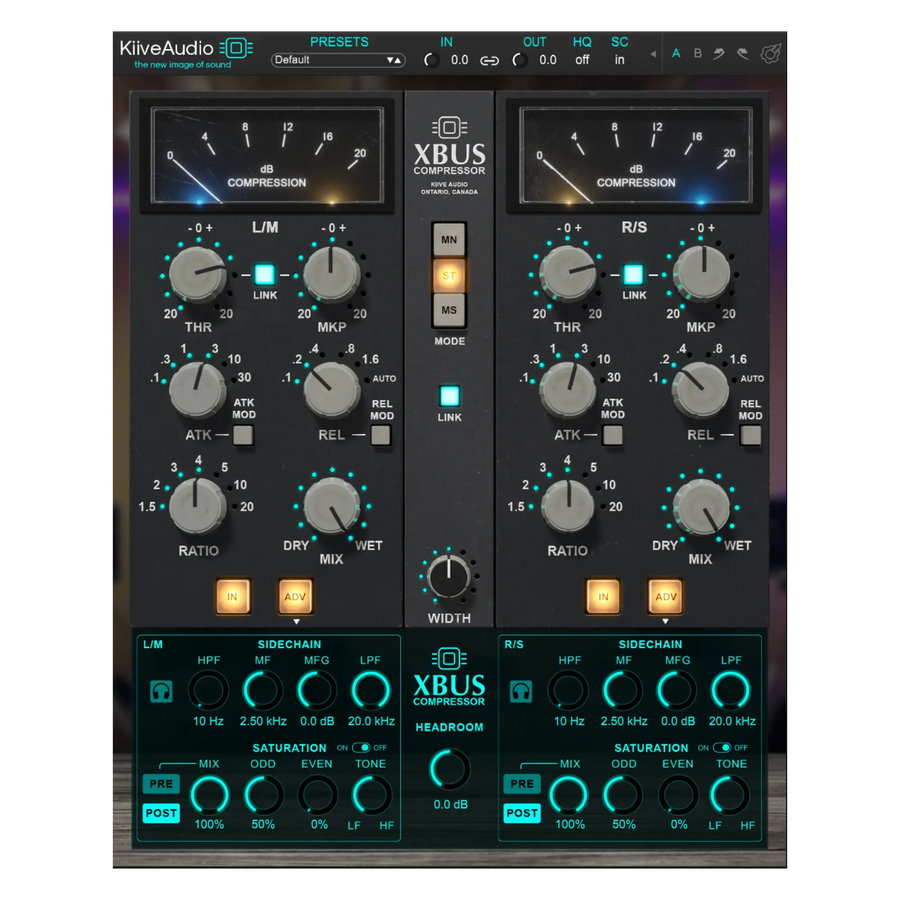
XBus
VCA bus compression with sidechain filtering, parallel blend, flexible stereo modes, and optional saturation before or after compression.
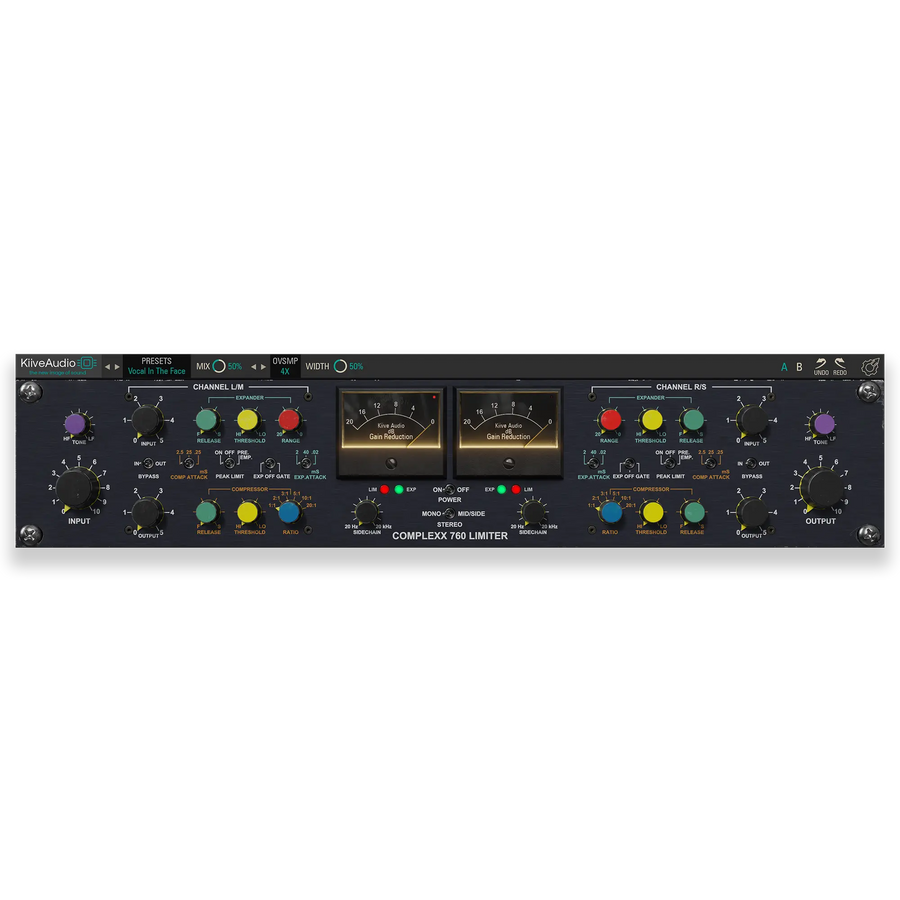
Complexx
FET compression with expansion, limiting, sidechain filtering, and flexible timing for everything from individual tracks to buses.

KC1 | Tube Compressor
Opto-style tube compression with manual timing controls for smooth leveling or more deliberate envelope shaping.
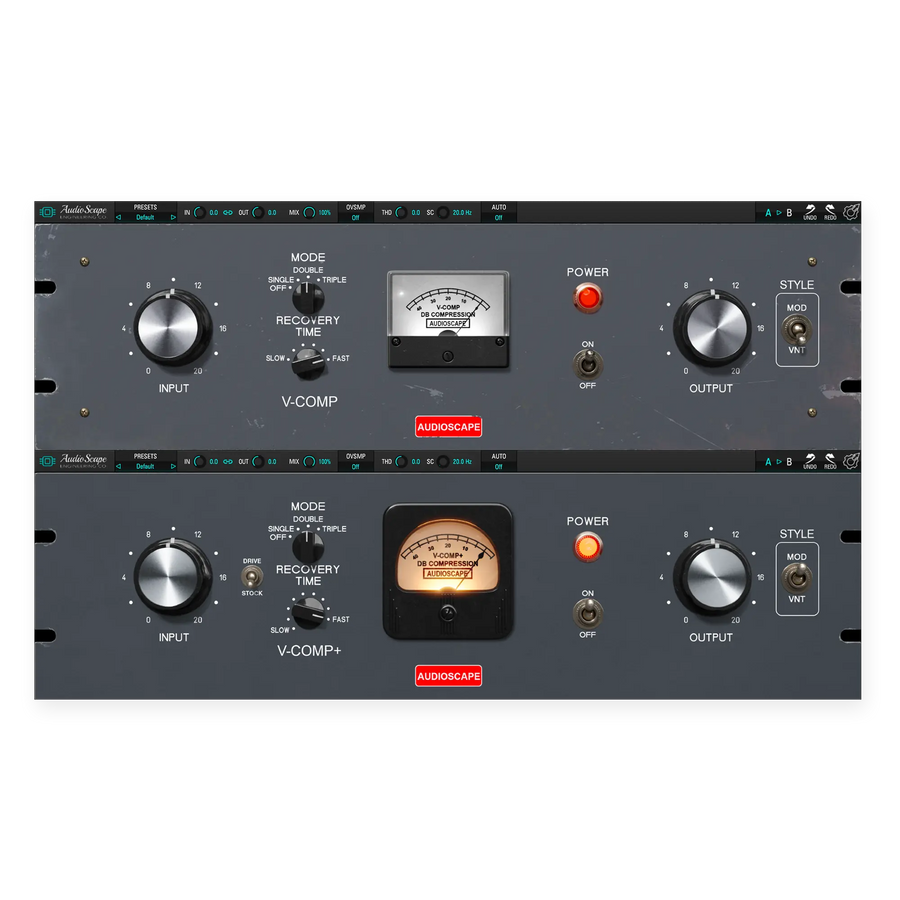
V-Comp | AudioScape
Vari-mu tube compression with program-dependent behavior and a bypass mode that keeps the tube and transformer signal path active.